Film series: Midcentury Melodrama
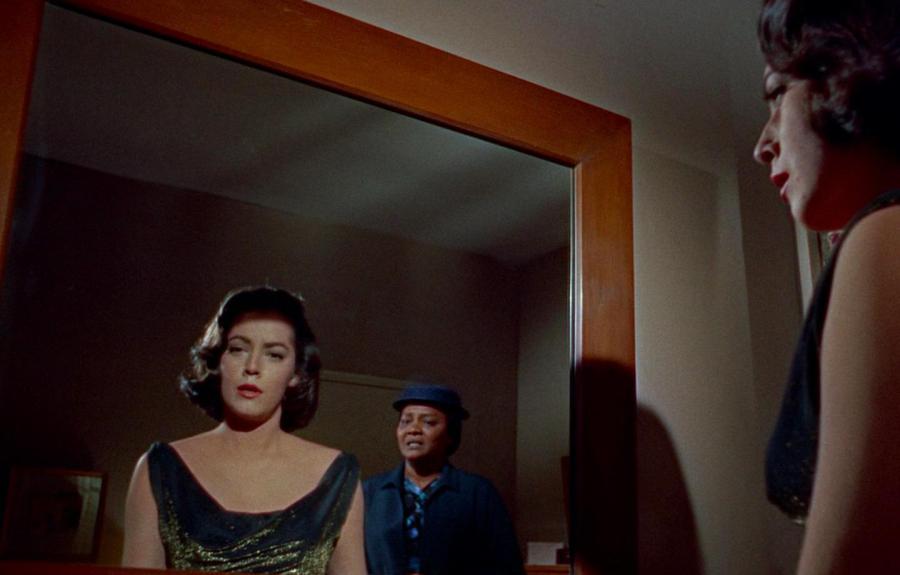
Melodrama is an expansive category of films that often center on romantic relationships, family life, and the moral struggles of their protagonists. Melodrama films have roots in “women’s weepies” of the 1920s and 1930s, a dismissive term used to describe films that explored the inner lives of women and were produced with female audiences in mind.
Melodrama films often feature dramatized scenarios and expressive characters whose personal anguish draws the viewer into a complex and memorable emotional experience. Melodrama films were long dismissed by critics as excessively emotional, stylized (as opposed to realist), and overly saccharine. However, in her 1998 essay “Melodrama Revisited,” film scholar Linda Williams argues that melodrama is “the fundamental mode of popular American moving pictures.” Though melodrama is by no means an exclusively American genre, critics and scholars have revisited the genre in more recent years and assigned it critical importance as a narrative structure that underpins a majority of classic Hollywood cinema.
Our Cornell Cinema series brings together five midcentury American melodramas by directors Douglas Sirk, George Cukor, Max Ophüls, and Nicholas Ray who are synonymous with the mode. These so-called “emotional pictures” epitomize the sentimental power of melodrama, but also underscore its ability to carry substantial political and social critique.