
Imitation of Life
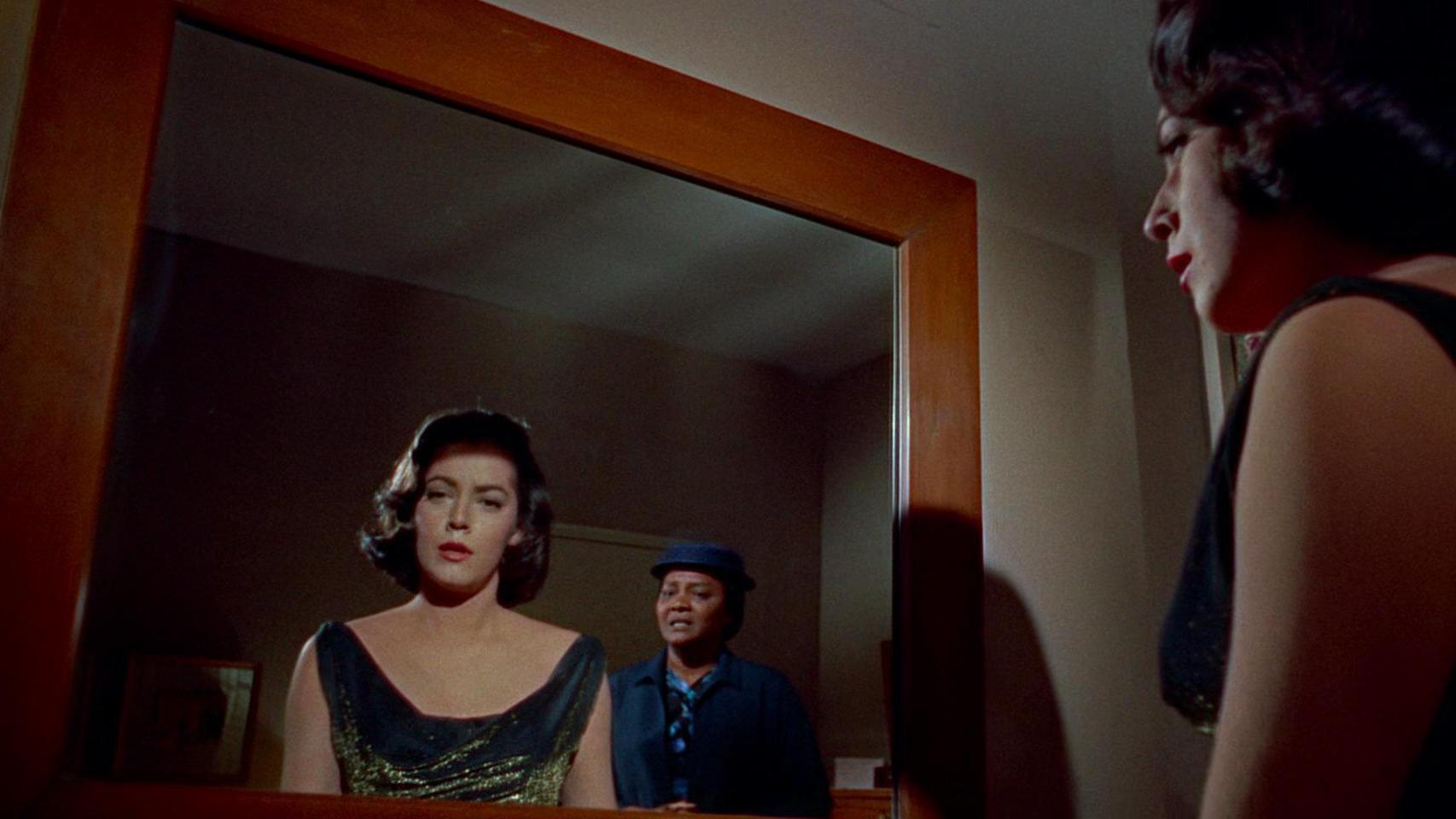
With Imitation of Life, Douglas Sirk takes the maternal melodrama trope to an extreme, using two contrasting storylines to carry out a devastating critique of racial prejudice and class division in midcentury America.
Lora Meredith (Lana Turner), a white single mother who dreams of being on Broadway, has a chance encounter with Annie Johnson (Juanita Moore), a kindly black widow, at Coney Island. After the two bond over the responsibilities of motherhood, Annie agrees to become the live-in caretaker of Lora's daughter Suzie (Sandra Dee) in order to allow Lora pursues her stage career. Both women deal with the difficulties of motherhood: Lora's thirst for fame threatens her relationship with Suzie, while Annie's light-skinned daughter Sarah Jane (Susan Kohner), struggles with her African-American identity and chooses to pass as white. As years of selfishness and denial pass, tragedy strikes, forcing both young women to come to terms with their own identities.
Master of melodrama Sirk imbues each scene with an sense of intense artifice, presenting a bejeweled world in which escape from one's social station is a rich fantasy indeed. Omnipresent mirrors and hyperreal domestic spaces amplify the film's social critique and the obliviousness of its white characters, and its final sequence is among the most heart-wrenching of the genre.
Part of our "Midcentury Melodrama" series. Courtesy of Universal Pictures and Swank Motion Pictures.