Film series: Exploring Ethnographic Filmmaking
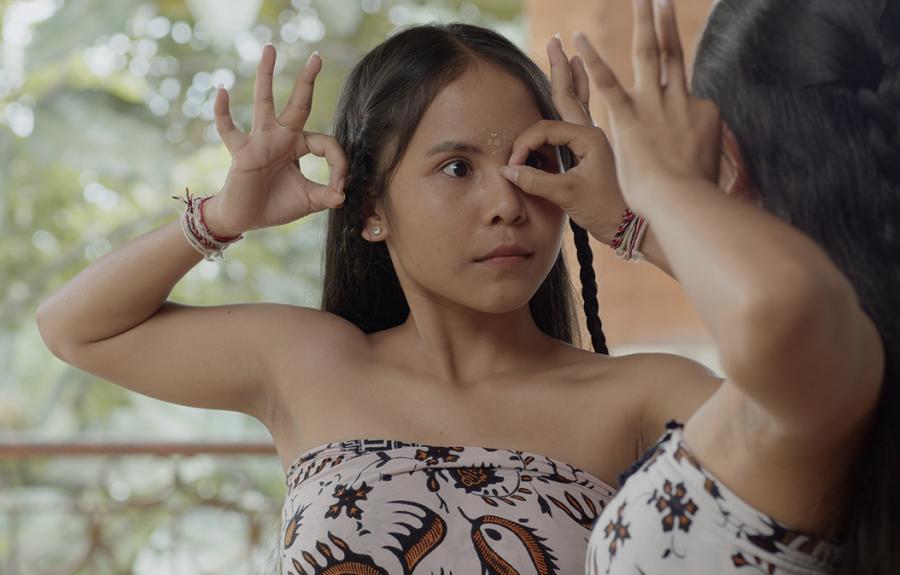
"Exploring Ethnographic Filmmaking" is a four-part film series that explores anthropology’s longstanding, complex engagement with visual media, asking how film has been used not only to document and render social life, but to categorize, analyze, theorize, and intervene in the world.
Anthropology is grounded in participant observation, a qualitative, sensory method premised on sustained presence and attention to everyday life. Yet despite observation being a hallmark of the discipline, anthropological training and knowledge production have remained largely discursive, and in some cases, “iconophobic,” foregrounding text and words over multimodal forms of analysis.
The series "Exploring Ethnographic Filmmaking" takes seriously the proposition that humans produce and acquire knowledge synesthetically—through sight, sound, and other senses—and that ethnographic film offers an analytically rigorous means of engaging non-discursive dimensions of social life. Across the programs, the camera is approached not as a neutral recording device, but as a methodological and theoretical instrument shaping what can be seen, known, and argued. The programs invite viewers to consider how lived social worlds are mediated through the “camera eye”.
Taken together, the course and film series position ethnographic film as a mode of anthropological theory-building rather than illustration. The films foreground the ethical and political stakes of cross-cultural representation while also demonstrating how image-making cultivates presence, patience, and attentiveness in fieldwork. The series invites audiences to consider how film can produce “thick depictions” of social worlds—approaching anthropology through experience, embodiment, and engagement as well as explanation and abstraction. In doing so, the program challenges the disciplinary hierarchy of words over images and asks what it might mean to train a more explicitly visual and sensory anthropological “skilled vision”.
The four-part series provides curated glimpses into a wider canon, tracing how ethnographic filmmakers have grappled with questions of observation, representation, authority, and sensory knowledge across different historical moments and political contexts.
Featuring:
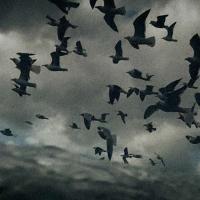
Program 1: Scientific Cinema
Monday, February 9, 4:30pm
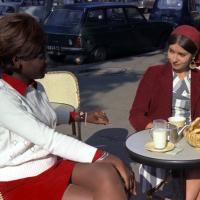
Program 2: Reverse Anthropology
Monday, March 9, 4:30pm
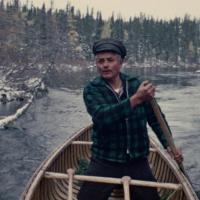
Program 3: Collaborative Filmmaking; Indigenous Media
Monday, April 20, 4:30pm
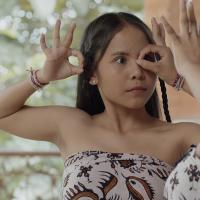
Program 4: Sensory Ethnography
Monday, April 27, 4:30pm
The series is presented in conjunction with the course "Ethnographic Film Theory and History" (ANTHR 4424/7424; PMA 4424/7424), which is cross-listed across the Departments of Anthropology and Performing & Media Arts, and is a pilot collaboration with Cornell Cinema to connect film-related courses and public programming on campus.
Curated by Natasha Raheja, Assistant Professor of Anthropology and Performing & Media Arts
Sponsored by the Department of Anthropology, the Nazaara Media Lab, a Visual Anthropology Research Lab at Cornell University, the Department of Performing & Media Arts, the Southeast Asia Program, South Asia Program, Cornell Media Studies, and the Qualitative and Interpretive Research Institute (QuIRI).