
Bigger Than Life
Thought largely overlooked upon its initial release, Nicolas Ray's twisted portrait of suburban American life is one of the most compelling films of the 1950s.
Bigger Than Life stars James Mason in one of his most indelible roles as Ed Avery, a friendly, successful suburban teacher and father living a humdrum existence until he is unexpectedly diagnosed with a rare heart condition that could kill him within a year. The good news? There is a new experimental drug that could potentially be a cure, but it has some concerning, potential side effects... Avery is will to accept the risk grows but soon grows dangerously addicted to the experimental drug cortisone, resulting in his transformation into a megalomaniacal and ultimately violent household despot.
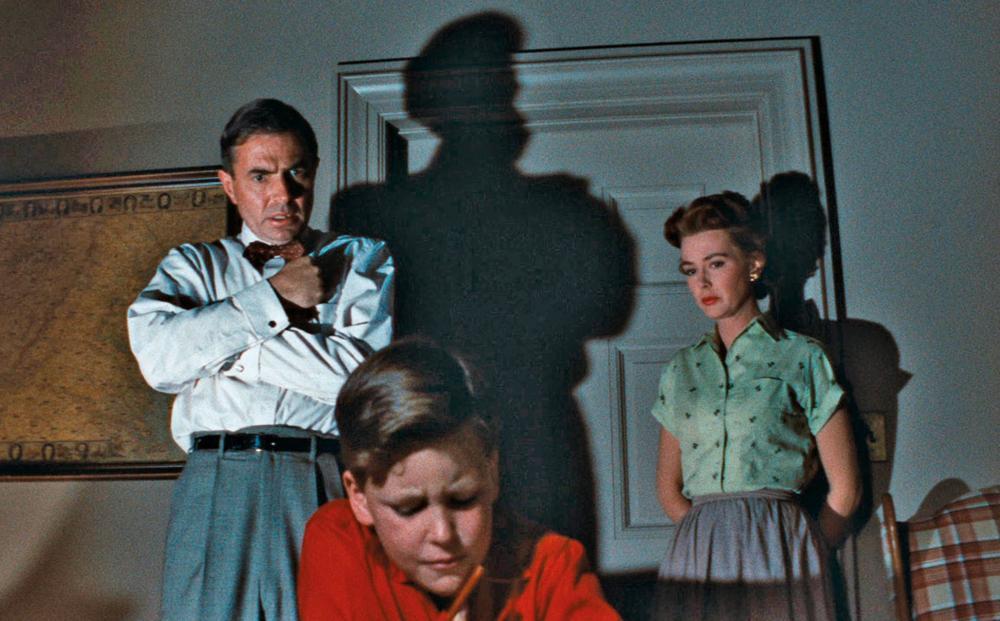
With Nicholas Ray's complex dissection of "normal" American family life is loosely based on the 1955 New Yorker story “Ten Feet Tall,” by Berton Roueché. His expressionist shots compositions and lurid use of color are almost surreal in their intensity and serve to magnify the drug-induced psychosis of its main character.
“One of Ray's most frightening and affecting pictures, one of the films that's meant the most to me over the years. Every Scope composition becomes an arena for the most primal emotions, leading to a truly shocking climax.” — Martin Scorsese
“There is not a director who films or frames interior shots with Ray's dynamic, fraught grace and who thereby explodes the rigid limits of 'script' material. No one made CinemaScope so glorious a shape as Ray, because it seemed to set an extra challenge to his interior sensibility. Ray was a self-conscious poet of American disenchantment... Rebel Without A Cause and Bigger Than Life show how plainly he saw manias building in America.” – David Thomson
Part of our "Midcentury Melodrama" series. Courtesy of 20th Century Fox and Criterion Pictures.