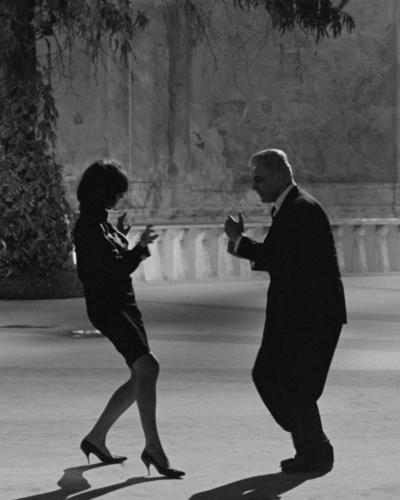
Cornell Cinema is pleased to announce our Spring 2026 season, which features a compelling line-up of films, series, and special events shaped in collaboration with partners across campus and designed to inspire critical reflection through the shared experience of cinema.
Our spring season begins on Thursday, January 22, with a 6pm screening of George Cukor’s Gaslight (1944), a classic Hollywood melodrama starring Ingrid Berman as a woman whose husband is trying to make her insane as part of a sinister murder plot, which screens as part of our “Midcentury Melodrama” series. This will be followed by an 8:30pm screening of Iranian director Jafar Panahi's It Was Just an Accident (2025), a moral thriller that explores questions of persecution and revenge in the aftermath of an authoritarian regime.
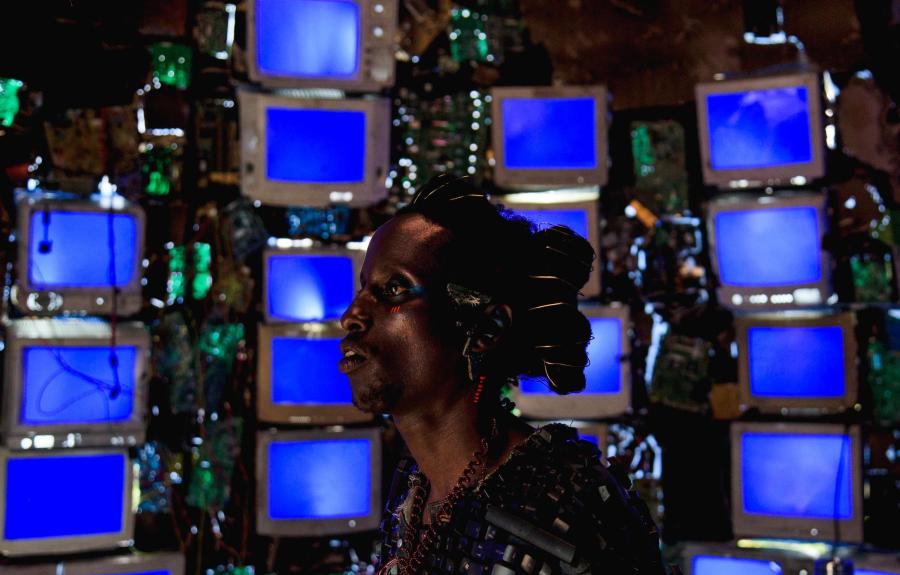
Still from Neptune Frost (2022). Courtesy of Kino Lorber.
Ethical questions about the relationships between human beings and technology are central to “Human Resources: Alienation, the Body, and Science Fiction.” The series, curated in collaboration with graduate student Duncan Eaton, brings together a dynamic selection of science fiction films to examine the human body as a site for the considering extractive nature of a hyper-technologized, capitalist society and its consequences. The series kicks off with Mamoru Oshii’s striking anime Ghost in the Shell (1993) on Saturday, January 24, at 8pm.
Technology is also a core focus of this year’s Science on Screen® series. A program of the Coolidge Corner Theatre with support form the Alfred P. Sloan Foundation, Science on Screen® features creative pairings of contemporary and classic films with informative introductions by experts from the fields of science, technology, and medicine. This semester, we will delve into questions of surveillance and doubt with Karen Levy and Francis Ford Coppola’s The Conversation (1974) and consider the A.I. alignment problem in 2001: A Space Odyssey (1968) with Joe Halpern and Shaun Nichols. We will also explore “terroir” in the Finger Lakes through the lens of Ridley Scott’s rom-com A Good Year (2006) with wine experts Ria D’Aversa and Cheryl Stanley and we will announce one additional Science on Screen® event later this spring.
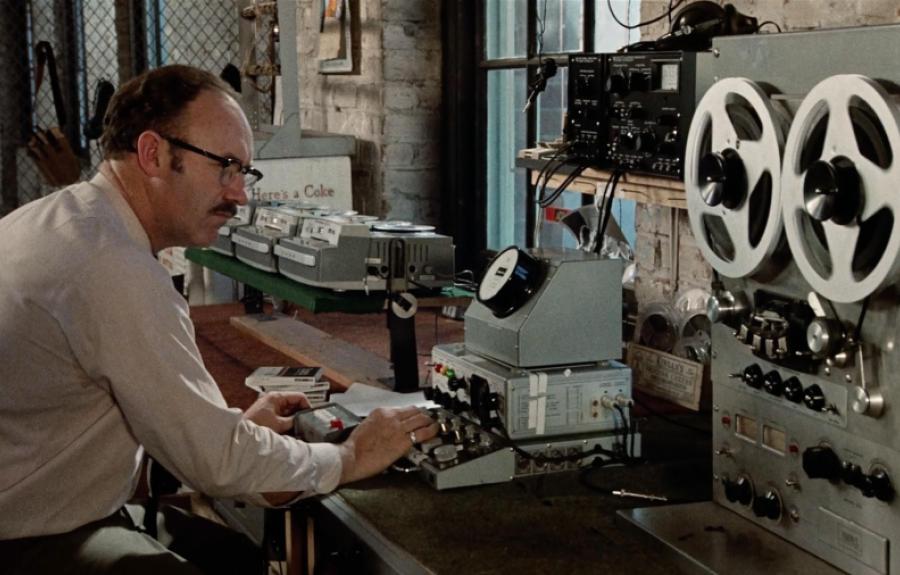
Still from Francis Ford Coppola's The Conversation (1974). Courtesy of Rialto Pictures.
Do you know what goes great with wine? Cheese!—A food that is at the heart of Holy Cow (Vingt Deux) (2024), a debut feature from Louise Courvoisier which also serves as the opening film for our annual French Film Festival. Supported by the Albertine Cinémathèque and presented in collaboration with the Department of Romance Studies, this year's festival theme is “A Family Affair.” The selected films—which will screen between March 1–21—explore a dynamic range of family structures as well as the challenges, complexities, and joys that infuse family relationships.
Questions of genre are top of mind across several film series at Cornell Cinema this semester. “Midcentury Melodrama” revisits a Hollywood genre that has often been dismissed by critics for being overly saccharine or emotional with a series of heart-wrenching dramas that also deliver substantial political and social critique. “Colombian Tropical Gothic”—a three-part series curated by graduate student Daniella Prieto and cosponsored by the Latin American and Caribbean Studies Program—invites us to experience a distinctively Latin American take on the Gothic horror genre through the three films by directors and creative collaborators Carlos Mayolo and Luis Ospina. Finally, our “Doc Spots” series foregrounds a compelling selection of new non-fiction films from all around the world, including Raoul Peck's Orwell 2+2=5 (2025) on Saturday, January 24, and the epic My Undesirable Friends Part 1: Last Air in Moscow, on Sunday, February 22.
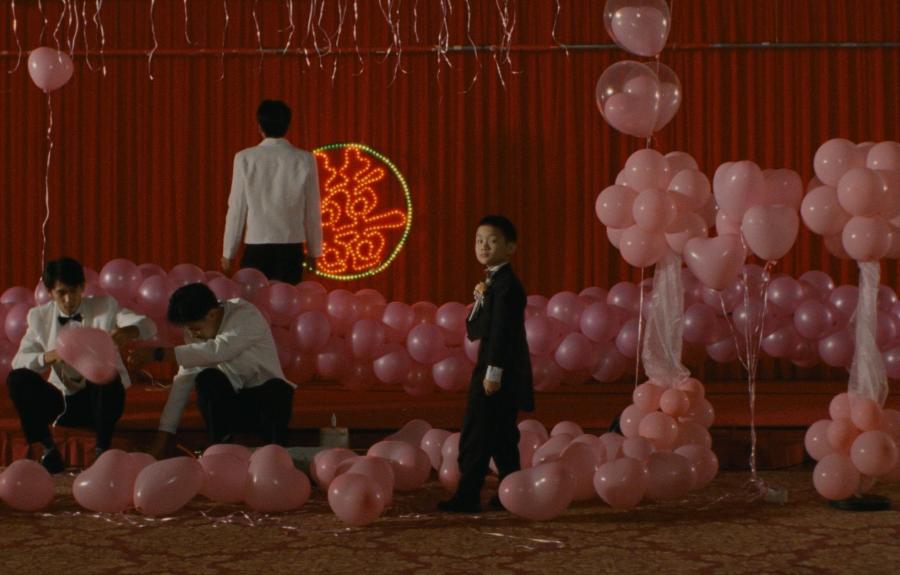
Still from Edward Yang's Yi Yi (2000). Courtesy of Janus Films.
Our ongoing “Restorations & Rediscoveries” series honors the work of archivists and film preservation institutions around the world, who identify and preserve at-risk films in collaboration with filmmakers and combining surviving film materials with the latest digital technologies. This semester, we are excited to spotlight new 4K restorations of Akira Kurosawa’s Ran (1985) and Taiwan New Wave director Edward Yang’s Yi Yi (2000), as well as a new 35mm print of Fellini’s 8 1/2 (1963), which screens during our opening weekend. We will also present restorations of The Godfather and The Godfather Part II in memory of the late actress Diane Keaton. After spring break, we will host a special presentation of Charlie Ahearn’s Wild Style (1982) in collaboration the Cornell Hip Hop Collection. (More details are forthcoming.)
Also, after spring break, we will be breaking out our 3-D glasses for “3-D: Another Dimension.” This series—which will offer a snapshot of the history of 3-D cinema technologies—includes the spooky 3-D horror classic House of Wax (1953), Alfred Hitchcock’s Dial M for Murder (1954), which was shot but not widely released in 3-D, and Steve Spielberg’s Jurassic Park (1993), which was remastered in 3-D for its 20th anniversary in 2013.

Still from House of Wax (1953). Courtesy of Warner Bros. and Swank Motion Pictures.
Our spring semester line-up is emblematic of Cornell Cinema’s commitment to fostering collaboration and advancing interdisciplinary teaching and learning across campus. “Fit for Duty” is presented in partnership with the Cornell Fashion + Textile Collection and centers military dress as a sartorial site for exploring questions of identity during and beyond active duty. “Olympic Visions” is conceived in collaboration with Dr. Jennifer Minner’s spring 2025 course “World Expos and Olympic Games: Mega‐events and City Media” and features four films that highlight the trials, tribulations, and triumphs of athletes competing in winter sports on the global stage. “Recovery in Community” reflects a thoughtful collaboration between Cornell Health, Cornell Cinema, Dr. Julie Carmalt's “Addiction Medicine Practice & Policy” course, and a few incredible Cornell students in recovery. Finally, “Exploring Ethnographic Filmmaking” will consider anthropology’s longstanding, complex engagement with visual media in partnership with Natasha Raheja, Assistant Professor in the Department of Anthropology, and her "Ethnographic Film History & Theory" course.
Campus collaborations are also fueling a number of filmmakers visits this spring. Cornell Cinema will host A.D. White Professors-at-Large Louis Massiah and Keri Putnam as well as a screening and discussion of Jordan Peele’s Us (2019) with film composer Michael Abels as part of “Music Unbound: From Stage to Screen with Michael Abels” for the College of Arts & Sciences’ Arts Unplugged series. We are also pleased that acclaimed filmmaker Kimi Takesue will join us for a mini-retrospective of her work in late February, sponsored by the Minority, Indigenous & Third World Studies Committee, and to welcome actor-filmmaker Ntare Guma Mbaho Mwine as a Carol B. Epstein Visiting Artist in the Department of Performing and Media Arts on Wednesday, February 18.
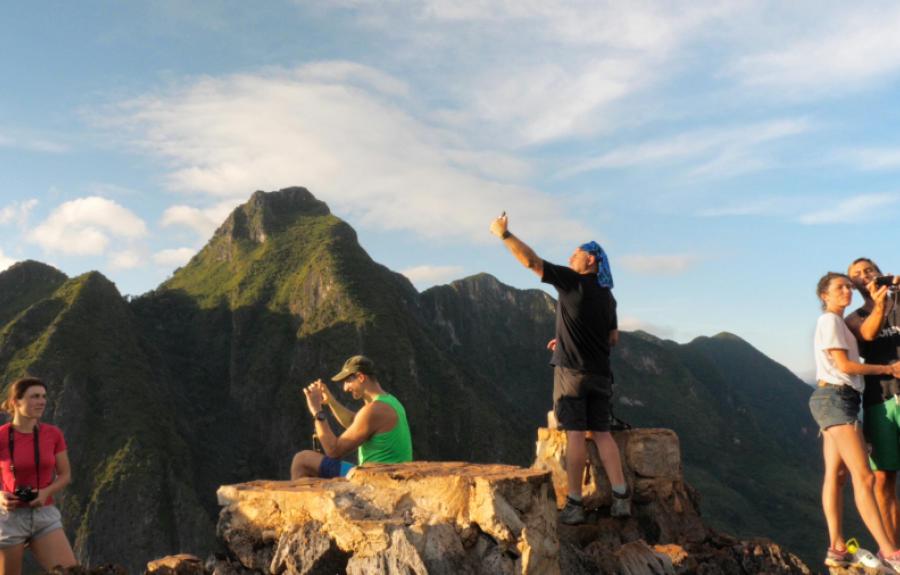
Still from Kimi Takesue's Onlookers (2023). Courtesy of Kimikat Productions.
Other visiting filmmaker events include a screening of Rule Breakers (2025) with filmmakers Roya Mahboob and Elaha Mahboob on February 11, sponsored by Cornell Law School’s Migration and Human Rights Program and other departments; a screening of Agents of Change (2016) with filmmaker Frank Dawson on February 19, sponsored by the Willard Straight Hall Centennial Committee and Black Student Empowerment within the Centers for Student Equity, Empowerment, and Belonging; a screening of ¿Are We There Yet? (2024) with local filmmaker Thomas Hoebbel on March 4, sponsored by the Migrations Program; and a screening of the new documentary Madrid Ext. (2025) with filmmaker Juan Cavestany on March 25 as part of Professors Cecelia Lawless and Patty Keller’s “Cinematic Cities” course.
More information about these and numerous other collaborations is now available on our website at cinema.cornell.edu. As always, additional films will be announced throughout the semester, so please sign up for our email list and follow Cornell Cinema on social media to receive the latest updates.
The best way to take advantage of all that Cornell Cinema has to offer is to purchase an All-Access Pass. This membership program offers admission to all regular Cornell Cinema screenings for the entire academic year — plus a discount on special events — for one low price. Prices are $40 for General Admission, $30 for Students (including all College and K-12 students), $36 for Cornell Faculty and Staff, and $25 for Cornell Graduate & Professional Students and passes are valid through May 2026.
If you would like to share news of Cornell Cinema with students or colleagues, you can download our Spring 2026 poster and other informational materials here.
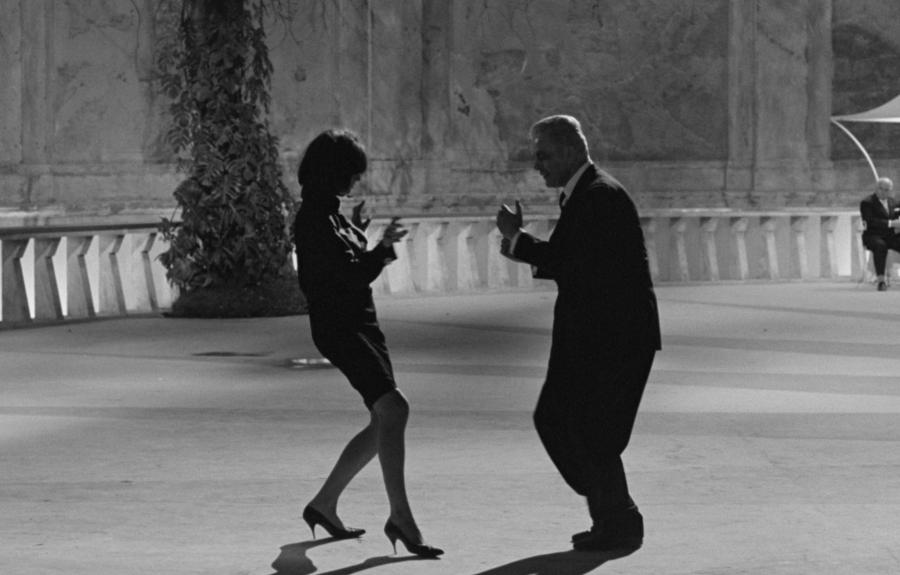
Still from Federico Fellini's 8 1/2 (1963). Courtesy of Janus Films.
About Cornell Cinema
Established in 1970, Cornell Cinema is a long-standing and celebrated film exhibition program at Cornell University, dedicated to expanding access to and fostering deeper appreciation of moving image work by filmmakers from across the globe. Working in collaboration with partners on campus and beyond, we seek to spark conversation, inspire innovative thinking, and advance interdisciplinary teaching through collective encounters with the art of film.
Cornell Cinema's programs are made possible by the New York State Council on the Arts with the support of the Office of the Governor and the New York State Legislature.
For more information, please contact:
Molly Ryan (she/her)
Director of Cornell Cinema
cinema@cornell.edu