
Archival Intervention: A Fidai Film & The Flowers Stand Silently, Witnessing
Archives are politically charged spaces with great capacity to preserve the historical complexity and cultural diversity of human society. As a result, archives are often targeted for destruction during wartime. However, archives can also be sites of exclusion that can amplify established narratives and overlook the presence marginalized groups.
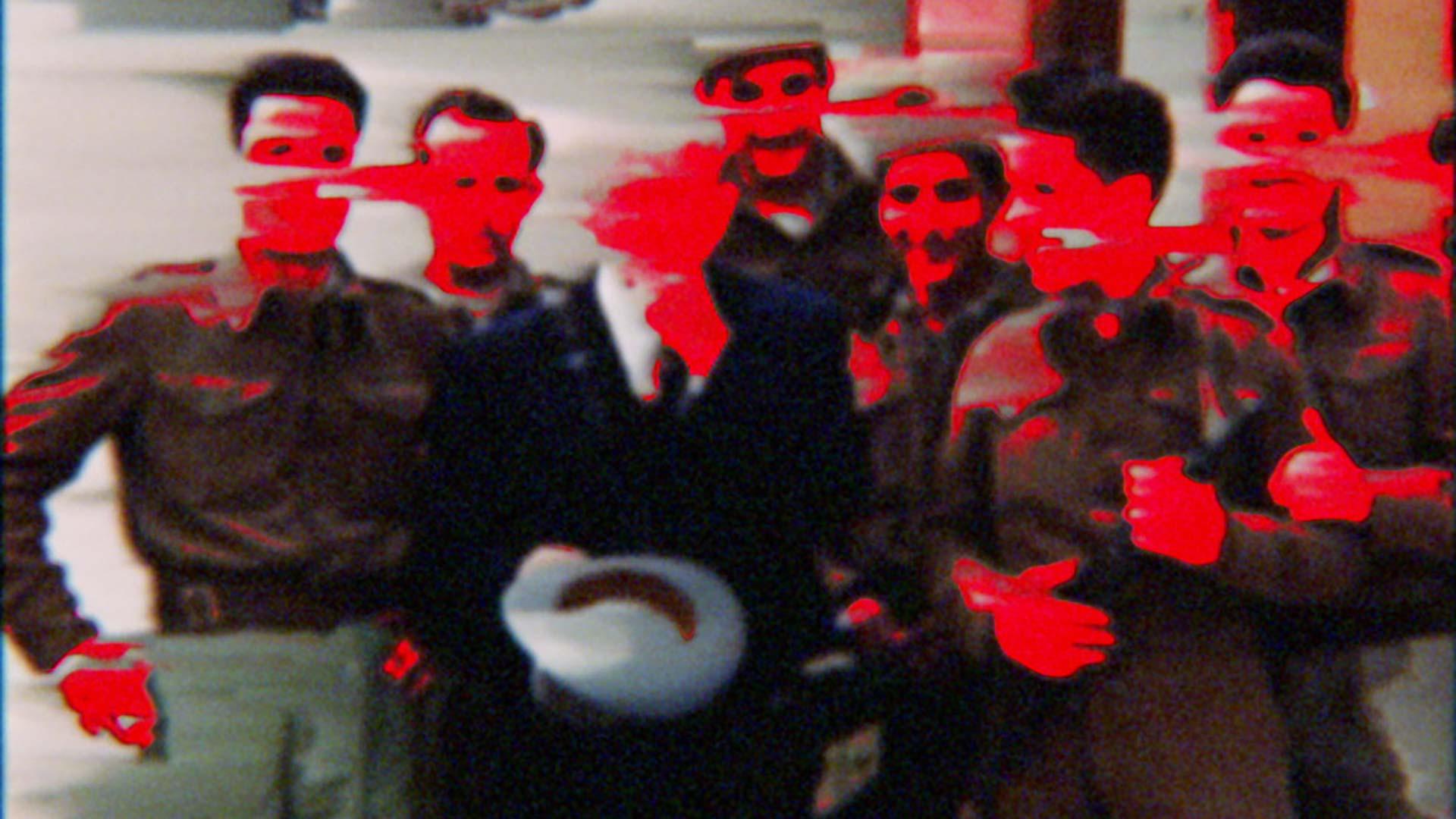
This program explores questions of testimony, resistance, and archival intervention through two recent experimental films by Palestinian filmmakers. Kamal Aljafari’s A Fidai Film and Theo Panagopoulos’s The Flowers Stand Silently, Witnessing manipulate in existing archival material to establish powerful counter-narratives that foreground Palestinian resistance and resilience.
A Fidai Film (2024, dir. Kamal Aljafari, 78 min.)
When the Israeli army invaded Beirut in the summer of 1982, it raided the Palestinian Research Center and captured its entire archive, which contained a sprawling collection of photographs, fiction films, documentaries, and newsreels from and about Palestine.
Kamal Aljafari’s A Fidai Film explores the visual memory of this looting through acts of “cinematic sabotage” on moving images collected clandestinely from Israeli archives. Using a unique blend of documentary and experimental filmmaking, Aljafari intervenes in these archival images — remixing soundtracks, scratching out captions, obscuring figures, and manipulating images — and constructs a counternarrative that reclaims these historical materials and foregrounds the past and present violence that surrounds them.
The film screens with:
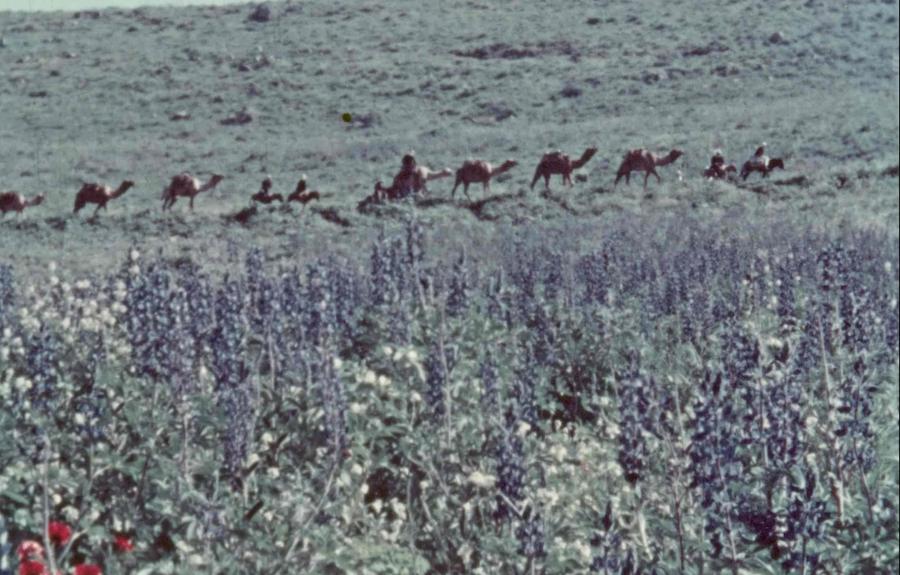
The Flowers Stand Silently, Witnessing (2025, dir. Theo Panagopoulos, 18 min.)
While conducting research at the National Library of Scotland, Theo Panagopoulos, a Palestinian filmmaker based in Scotland, accidentally discovered an undigitized archive of colored footage of Palestinian wildflowers. Filmed by a Scottish missionary in the 1930s and 1940s, these rarely seen, visually stunning images also obscure the presence of Arab Palestinian people.
Motivated by this sense of archival erasure and the ongoing violence in Palestine, Panagopoulos decided to reclaim the footage and created The Flowers Stand Silently, Witnessing. This tender essay film questions the role of image-making as a tool of both testimony and violence when connected to entanglements between people and land.
Cosponsored by the Department of Near Eastern Studies.
This screening is part of our “Experimental Lens” series, which is supported by a grant from the Cornell Council for the Arts.
Special thanks to Flavia Mazzarino at Kamal Aljafari Productions, Milda Valiulytė at the Scottish Documentary Institute, and colleagues at LUX Scotland.